A red light camera flash is easy to miss. A police officer pulling you over is not. Either way, the same question forms immediately: what does this actually cost, and what happens to your license? After more than a decade defending drivers across all five boroughs of New York City, we’ve walked through this process hundreds of times. The answer depends almost entirely on which kind of ticket you received, because the two follow completely different rules, go to different agencies, and carry different consequences.
Most drivers assume a red light ticket is a red light ticket. That assumption leads to missed deadlines, unexpected surcharges, and avoidable points on a driving record. Understanding the fork in the road from the start is the most useful thing you can do before deciding whether to pay or fight.
Camera Notice vs. Officer Citation: Two Tickets That Work Nothing Alike
Camera-Issued Notice of Liability
When a vehicle passes through a red light at an equipped intersection, the NYC Department of Transportation reviews the footage and mails a Notice of Liability to the registered owner. The charge is based on owner liability under VTL 1111-a, not a direct accusation against whoever was driving. Because it targets the owner rather than the operator, a camera ticket conviction doesn’t go on the driving record and carries zero license points. The fine is capped at $50 by state law.
Officer-Issued Traffic Citation
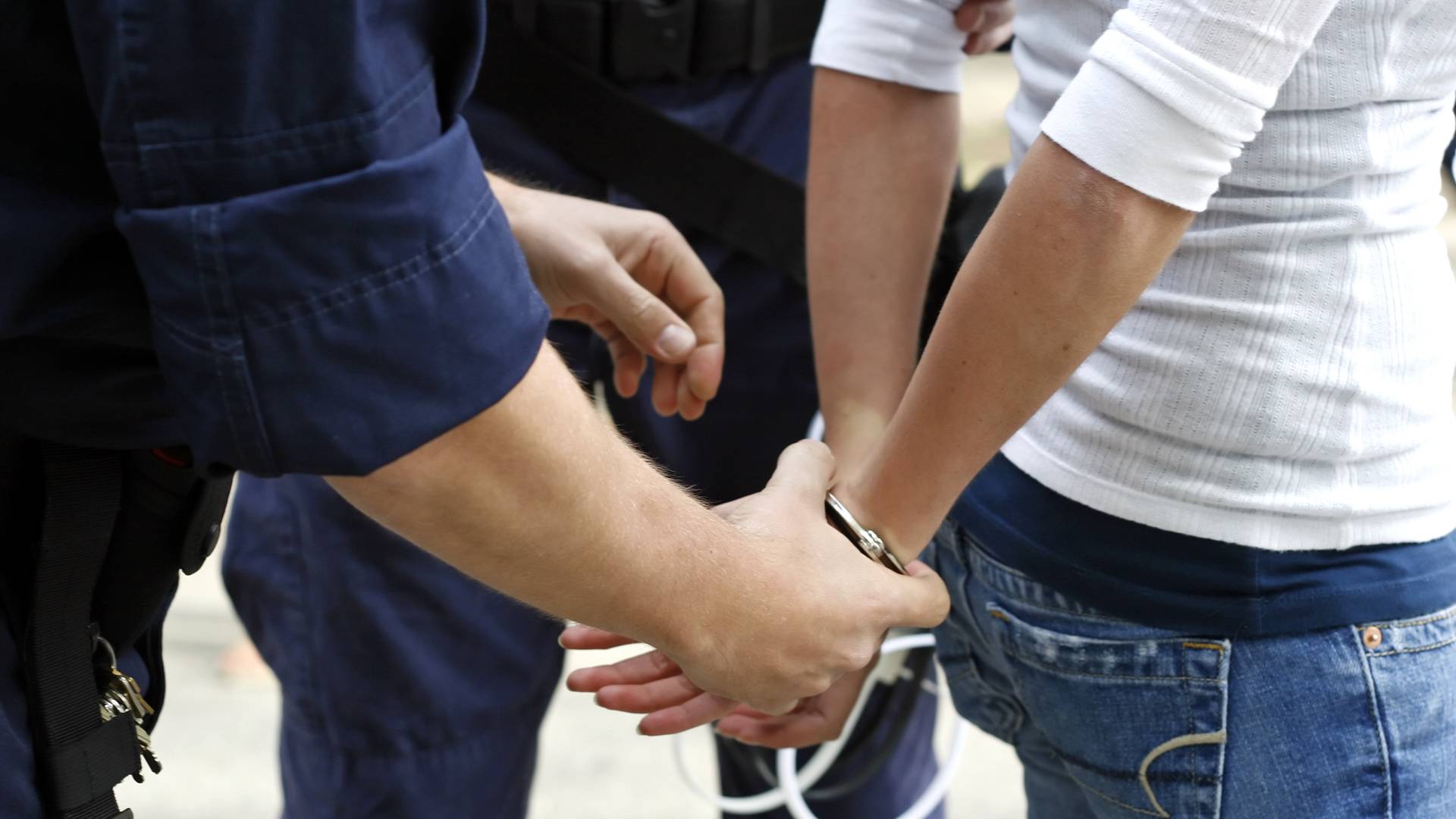
When a police officer personally witnesses the violation, the ticket charges the driver directly. The specific charge matters: VTL 1110(a), failing to obey a traffic control device, carries 2 points on conviction, while VTL 1111(d)-1, the more targeted red light statute, carries 3. Both go on the driving record and are handled by the NYS DMV’s Traffic Violations Bureau rather than a local criminal court.
What Happens After a Camera Ticket Arrives
The clock starts the day the Notice of Liability is mailed. You have 30 days to respond, either by paying the $50 fine or requesting a hearing. Both options are available online, by mail, or in person at the NYC Department of Finance. Not responding within 30 days doesn’t make the ticket disappear: a $25 late penalty is added, a second final notice follows roughly 30 days after that, and once it arrives, you have 14 days before enforcement action can begin against the registered owner.
Requesting a hearing is worth considering if the facts support a legitimate defense. New York law recognizes several:
- Medical emergency or documented health situation that required disregarding the signal
- Instructions from law enforcement directing the vehicle through the intersection
- Funeral procession following authorized lead vehicles
- Misidentified vehicle or license plate in the camera footage
- Stolen or transferred plate at the time of the violation
- Malfunctioning camera or broken signal at the intersection
Because the charge is an owner liability matter, it can’t be used to raise insurance premiums and won’t appear on your driving record. That makes a camera ticket less damaging than it initially feels, but the fine and deadline are still real. If cameras at more than one intersection caught the same vehicle on the same day, each violation is treated as a separate ticket with its own $50 fine, response deadline, and late penalty if ignored.
What Happens After an Officer Issues a Red Light Ticket
An officer-issued ticket must be answered through the NYS DMV’s Traffic Violations Bureau, which processes all moving violations issued within the five boroughs. You can plead guilty and pay the fine online, by mail, or in person. A VTL 1110(a) conviction carries a $40 fine plus an $88 mandatory surcharge, for a total of $138. A VTL 1111(d)-1 conviction carries a higher fine range and 3 points rather than 2. Jail time of up to 15 days is technically possible under the statute but is rarely imposed.
If you have a defense, you plead not guilty and receive an assigned hearing date. The TVB doesn’t allow plea bargaining, and that distinction matters. At almost any other court in the state, a defense attorney can negotiate a reduced charge, a lesser violation, or an arrangement that avoids points. At the TVB, that option doesn’t exist. A not guilty plea leads to a full hearing before an administrative law judge with only two possible outcomes: full conviction or dismissal. A Statement in Place of Personal Appearance (sometimes called a SIPOPA) lets the driver submit a written defense without appearing, though its effectiveness depends heavily on the quality of the argument made.
New York’s driver point system tracks violations over a rolling 24-month period from the date of each violation. The Driver Responsibility Assessment, the surcharge triggered when points accumulate, uses a shorter 18-month window. Once your point total reaches 6 or more within any 18-month period, the DMV bills an annual Driver Responsibility Assessment fee on top of whatever fine the ticket carried, billed for three consecutive years. A single 3-point VTL 1111(d)-1 ticket following an earlier 3-point conviction within the same 18-month window can trigger that surcharge entirely on its own. The difference between 24 months and 18 months isn’t a technicality. It determines whether a ticket follows you for less than two years or becomes a three-year financial obligation.
Officer-issued convictions appear on your driving record, and insurance carriers review that record at renewal. A conviction under VTL 1111(d)-1 is more likely to affect your premium than a VTL 1110(a) conviction, both because of the additional point and because it reflects a specific finding of running a red light rather than a general traffic device violation. For drivers whose income depends on a clean record, commercial drivers, for-hire vehicle operators, anyone subject to employer driving checks, the stakes of a TVB hearing run far higher than the fine amount alone suggests.
Act Before the Deadline Does
Whether your ticket is a camera notice with a 30-day response window or an officer citation that needs to be answered before a TVB hearing, the time to act is now. The consequences of the two ticket types differ, but they share one thing: a deadline that won’t pause while you decide what to do. Traffic Court Pro PLLC handles the TVB process for drivers across all five boroughs for a flat fee. Reach out to us at (516) 289-9804 for a free consultation to review your specific ticket before that window closes.